

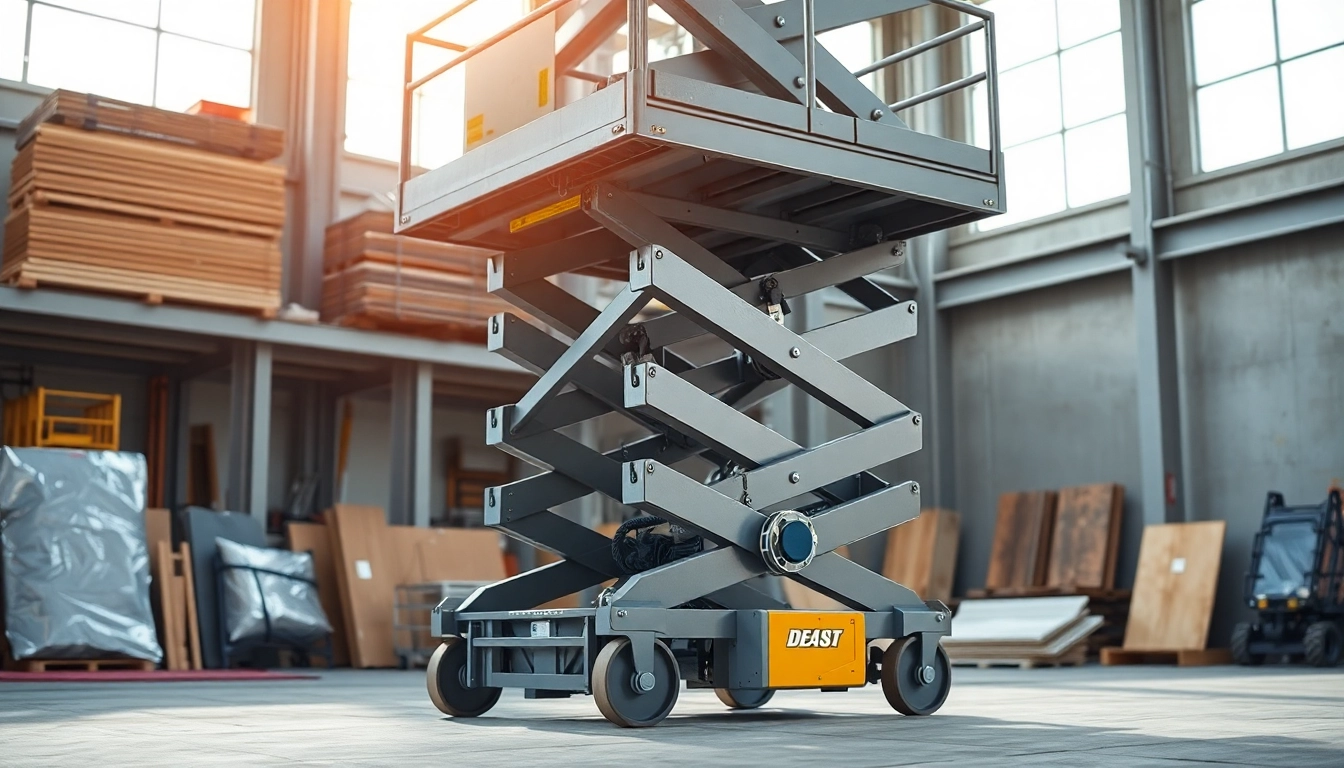
Understanding the Scissor Lift
What is a Scissor Lift?
A scissor lift is an essential piece of equipment used primarily in construction, maintenance, and industrial applications for lifting personnel and materials to elevated heights. The mechanism operates through a series of crisscrossing supports—resembling a pair of scissors—that allows the platform to extend vertically while remaining stable. This unique design enables safe and effective navigation in a variety of environments, making the scissor lift a go-to choice for many professionals.
Key Features of Scissor Lift
Scissor lifts are designed with several key features that enhance their functionality and usability. Some of the primary features include:
- Vertical Lift Mechanism: The scissor-like movement allows for a smooth vertical ascent and descent.
- Platform Stability: With a solid platform that prevents wobbling, operators can work confidently at heights.
- Variety of Heights: Scissor lifts come in various models, offering different maximum heights to meet specific project needs.
- Power Options: Available in electric and diesel models, enabling use both indoors and outdoors.
- Capacity: Most scissor lifts can support multiple workers and tools, improving productivity at height.
Types of Scissor Lift Applications
Scissor lifts are versatile and can be employed across various industries. Notable applications include:
- Construction: Ideal for framing, roofing, and installing fixtures at height.
- Maintenance: Used for light fixture replacements, HVAC servicing, and painting.
- Warehousing: Facilitates storage access and inventory management in high shelves.
- Event Setup: Employing scissor lifts for staging and lighting installations in convention centers.
Benefits of Using a Scissor Lift
Enhanced Safety Measures
When it comes to working at heights, safety is paramount. Scissor lifts come equipped with numerous safety features, including guardrails, emergency stop buttons, and secure locking mechanisms. These features significantly reduce the risk of falls and accidents, safeguarding both workers and materials. Moreover, operators benefit from a lower risk of injury due to the ergonomics of their design.
Increased Efficiency on Job Sites
Efficiency is vital for completing projects within budget and on time. Scissor lifts boost productivity by allowing multiple workers to access heights simultaneously, reducing the need for cumbersome ladders or scaffolding. With easier access to tasks at height, jobs can be completed faster, ensuring companies meet deadlines and maintain operational workflow.
Cost-Effectiveness of Scissor Lift Rental
Investing in a new scissor lift can be costly, particularly for short-term projects. Renting a scissor lift provides companies the flexibility to access the equipment without the high purchase costs. This approach not only saves money but allows project managers to choose the right lift for specific tasks without long-term commitments.
Selecting the Right Scissor Lift
Choosing the Appropriate Lift Height
Identifying the correct scissor lift height is crucial. Standard models offer heights ranging from 20 to 50 feet, while specialized lifts can reach up to 70 feet or more. To determine the ideal lift height, consider the project requirements and operational environment, ensuring you have adequate elevation without compromising safety.
Evaluating Lift Weight Capacity
Weight capacity is another critical factor when selecting a scissor lift. Most lifts can accommodate between 500 to 1,500 pounds. It’s essential to assess the total weight of personnel and materials that will be on the platform to avoid overloading. Understanding weight limits can assist in selecting a lift that aligns with the projected workload.
Identifying the Right Power Source
Scissor lifts come with different power sources, including electric and diesel. Electric scissor lifts are ideal for indoor work due to their quiet operation and zero emissions, while diesel models excel in outdoor settings where rugged terrain and extended power supply are necessary. Evaluating job site conditions will help in choosing the appropriate power source.
Operating a Scissor Lift Safely
Essential Safety Guidelines
To ensure the safe operation of scissor lifts, adherence to safety guidelines is vital. Operators should complete safety training, understand the lift’s controls, and conduct pre-operation inspections. Key safety practices include wearing appropriate personal protective equipment (PPE), adhering to weight limits, and ensuring the lift is on stable ground before use.
Pre-Operational Checklist
Prior to using a scissor lift, operators should conduct a thorough checklist that includes:
- Inspecting the lift for any visible defects or malfunctions.
- Testing the emergency stop and other safety features.
- Ensuring that the area is clear of obstacles and hazards.
- Confirming the lift is sufficiently charged or fueled for the intended use.
Training Requirements for Operators
Proper training is essential for scissor lift operators. Training usually covers equipment operation, site safety protocols, hazard recognition, and emergency procedures. Companies should ensure that operators are certified to reinforce safe practices and legal compliance.
Common FAQs about Scissor Lifts
What projects require a scissor lift?
Scissor lifts are perfect for tasks such as construction, maintenance, installation of fixtures, and warehouse inventory management, particularly those requiring elevation.
How do I ensure safe operation of a scissor lift?
To operate safely, ensure proper training, conduct pre-operation checks, adhere to weight limits, wear appropriate PPE, and follow site safety protocols.
What should I consider when renting a scissor lift?
When renting, evaluate the required lift height, weight capacity, power source, duration of use, and consider whether you need additional accessories or features.
How high can a typical scissor lift reach?
Typical scissor lifts can reach heights ranging from 20 to 50 feet; however, some specialized models can exceed 70 feet for unique tasks.
Are scissor lifts suitable for indoor use?
Yes, electric scissor lifts are specifically designed for indoor use, as they produce no emissions and operate quietly, accommodating tasks in limited spaces.